Driving over Snoqualmie Pass in winter is a reality for many Washington drivers, and it is one of the most unpredictable and accident‑prone stretches of highway in the state. Heavy snowfall, freezing rain, black ice, avalanche control work, and sudden traffic slowdowns all contribute to frequent closures and winter crashes.
Each year, collisions on Snoqualmie Pass lead to long delays, vehicle damage, and secondary accidents. Preparing before you leave—and understanding how winter damage actually occurs—can reduce risk and help you respond correctly if something goes wrong.
Check Road Conditions Before You Travel
Conditions on Snoqualmie Pass can change rapidly. Always check current updates from the Washington State Department of Transportation (WSDOT) immediately before departure. WSDOT provides real‑time information on closures, traction requirements, chain enforcement, and weather conditions.
Checking conditions early helps you avoid chain enforcement backups and prevents getting stuck during sudden closures.
Washington State Chain and Traction Requirements
During winter months, WSDOT often requires snow chains or approved traction tires when traveling over Snoqualmie Pass. Four‑wheel‑drive and all‑wheel‑drive vehicles are typically exempt from installing chains, but only if:
- The vehicle is equipped with approved traction tires.
- A set of chains is carried in the vehicle at all times.
Failure to meet these requirements can result in fines, delays, or being turned around at enforcement checkpoints.
Where and How to Chain Up Safely
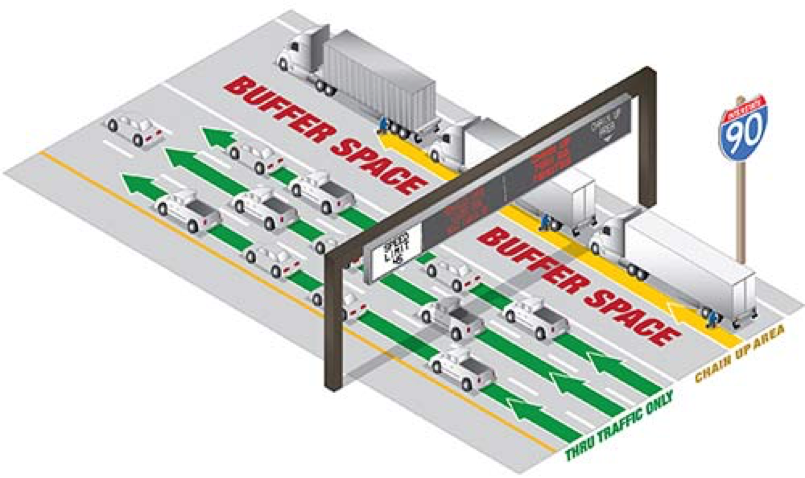
Chains may only be installed and removed in designated chain‑up and chain‑off areas. Pulling over outside approved zones is dangerous due to limited visibility, narrow shoulders, and avalanche risk.
Chain installation requirements:
- Front‑wheel drive: Install chains on the front tires.
- Rear‑wheel drive: Install chains on the rear tires.
Ensure your chains are properly sized. Poorly fitted chains can damage wheels, brake lines, and body panels. The expanded westbound chain‑up area now offers better traffic flow, but caution is still required during peak winter travel.
Common Winter Accident Damage on Snoqualmie Pass
Winter collisions on Snoqualmie Pass often cause more damage than drivers initially realize. Even low‑speed slides on ice or packed snow can create safety issues that are not immediately visible.
The most common winter crash damage we see includes:
- Cracked, torn, or misaligned bumpers from sliding into guardrails.
- Hidden structural damage caused by lateral impacts on icy surfaces.
- Wheel alignment and suspension damage from striking snowbanks, ice ruts, or debris.
- Underbody damage affecting steering and stability systems.
Because winter crashes often involve sliding rather than direct impact, damage is frequently underestimated. A vehicle may appear drivable but still be unsafe without a professional inspection.
What to Do After a Winter Slide or Collision
If your vehicle slides, spins out, or makes contact with a barrier on Snoqualmie Pass:
- Document visible damage as soon as conditions allow.
- Notify your insurance provider.
- Avoid assuming damage is cosmetic.
- Have the suspension and alignment inspected promptly.
Winter‑related damage can worsen quickly, especially if steering or suspension components are compromised.
Did you spin out on Snoqualmie Pass?
We specialize in winter collision repair and suspension checks. Our team can inspect hidden damage and make sure your vehicle is safe to drive again.
Request an Estimate in Tacoma or learn more about our Collision Repair Services.
Plan Ahead and Drive Cautiously
Snoqualmie Pass is manageable in winter conditions when drivers prepare properly and follow Washington State traction laws. Carry chains, monitor road conditions closely, and take even minor vehicle damage seriously after winter incidents. A cautious approach helps prevent repeat breakdowns, secondary accidents, and long‑term vehicle issues.